
How Much Does a Privacy Fence Cost? (2026 Price Guide)
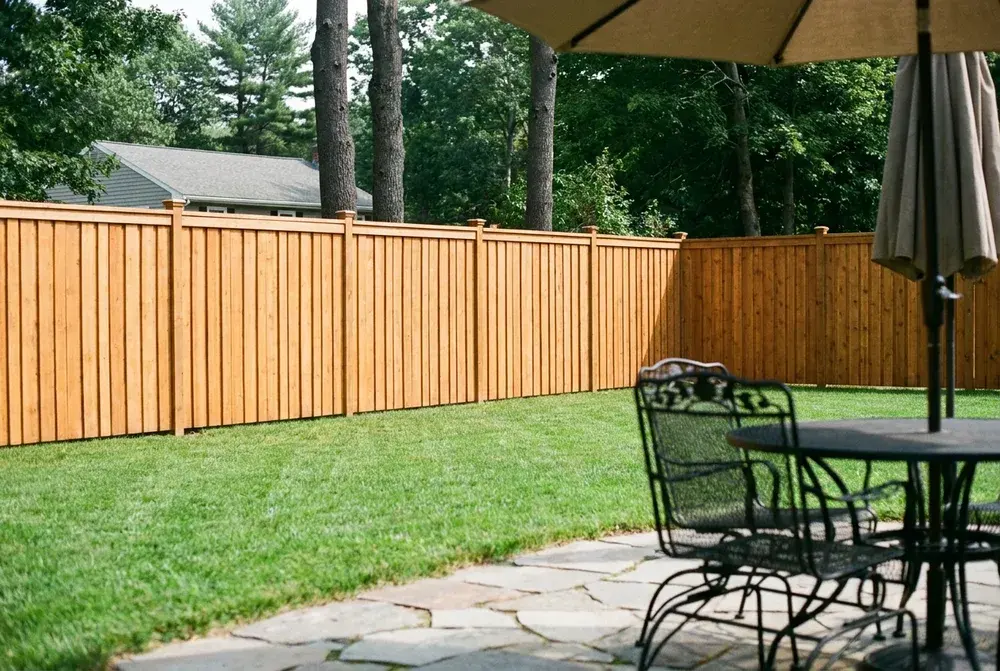
A privacy fence costs about $25 to $60 per linear foot installed in Connecticut as of 2026. Wood sits near the low end. Vinyl sits near the high end. A solid six-foot fence catches a lot of wind. That is why correct post depth and spacing below the frost line drive the labor share of the price.
How much does a privacy fence cost per foot in 2026?
As of 2026, a privacy fence in Connecticut runs about $25 to $60 per linear foot installed, depending on material. This range covers materials and labor. It comes from national cost guides reconciled with our own published Connecticut fence cost guide, not from a quote for your yard. A written estimate always starts with a visit, not a phone call.
A&L Fence builds privacy fences in solid-board wood or vinyl panels, usually a full six feet tall, through our privacy fence installation service. Either material blocks the view fully when the run is built tight, with no gaps between the boards or panels.
Here is how the range breaks down by material.
| Fence type | Cost per linear foot, installed | Source |
|---|---|---|
| Wood privacy fence (cedar or pressure-treated pine) | $25 to $50 | National cost guides, 2026 |
| Vinyl privacy fence | $30 to $60 | National cost guides, 2026 |
These numbers are market ranges, not a quote from A&L Fence. Every yard is different, so the only way to get a real number is to have someone measure your fence line.
Labor usually adds another $5 to $10 per linear foot on top of material cost. A privacy fence needs closer post spacing and deeper, wider footings than an open fence style. Every extra post means another hole dug and another footing poured, and that pushes more of the price into labor.
Want a real number for your yard? Get a free estimate and we will walk your property line in person.
Why does wind make privacy fence posts more expensive?
Wind makes privacy fence posts more expensive because a solid six-foot panel acts like a sail. A standard 6-foot panel between posts set 8 feet apart holds about 48 square feet of solid surface. Wind pushes hard against all of it. At 80 mph, that is over 750 pounds of sideways push on just two posts and their concrete footings. In a stronger storm near 100 mph, that push climbs to around 1,200 pounds on an 8-foot section.
Setting posts closer together cuts that load. Moving from 10-foot spacing down to 6-foot spacing cuts the wind load on each post by about 40 percent. Chain link does not need this. Wind passes through the open mesh instead of pushing against a solid wall. A privacy fence needs closer posts and a deeper, wider concrete footing to handle that extra push. The fix is a wider footing, about 14 to 16 inches across instead of the standard 10 to 12 inches. A wider footing holds up better where storms hit hard.
Connecticut's frost line runs deep too. State code requires posts to sit below the region's frost line, commonly put at around 42 inches here. A privacy fence catches far more wind than an open-style fence. That means a shallow post is more likely to lean or snap in a nor'easter than the same shallow post would on a chain link run.
A&L Fence sets every privacy fence post below the frost line in concrete and spaces the posts correctly, because the posts are what keep a strong storm from pushing the run over. We build the runs straight and tight so there are no gaps for eyes to peek through, and no weak points for wind to catch.
Should you build a privacy fence in wood or vinyl?
Both wood and vinyl fully block the view when built tight. Which one is right for you comes down to upfront cost, upkeep, and how long you plan to stay in the home.
Wood costs less to install and gives you a warm, natural look you can stain any color. It needs a coat of stain or sealer every two to four years to hold up against Connecticut's wet springs and cold winters. Skip that upkeep and the wood dries out and starts to rot.
Vinyl costs more up front but needs almost no upkeep. It never needs paint or stain, does not rot or warp, and cleans up with a garden-hose rinse. Vinyl panels lock rigidly into their posts. That makes correct post depth matter even more for vinyl than for wood. A heaved post has nowhere to give, so it stresses the rigid panel instead of flexing with it.
For the full breakdown of looks, upkeep, and long-term cost, see our full wood vs vinyl comparison.
Do you need a permit for a six-foot privacy fence in Connecticut?
Most Connecticut fences under 7 feet, including a standard six-foot privacy fence, do not need a full state building permit. Many towns still require a separate zoning permit or approval for fence placement and height. A pool barrier fence always needs a permit, no matter its height. For the full rules on height limits by town, see Connecticut's fence height rules.
That local zoning check is easy to miss if you are not looking for it. A&L Fence handles the permit paperwork for customers, so nothing gets missed after the fence is already up.
Get a real privacy fence price for your yard
These ranges are a starting point, not your bill. A&L Fence is a family-owned company in New Britain. Owner Alexander Medina has more than 20 years of hands-on fence-building experience. We hold Connecticut Home Improvement Contractor license HIC 0706262. Every job comes with a free estimate and a 100% satisfaction guarantee.
Get a free estimate from A&L Fence and we will measure your yard and check your digging conditions in person. We will give you an honest number in writing. You can also call us at (207) 227-5825.
Talk to A&L Fence
Questions about your fencing job? We serve New Britain and the surrounding area with honest, upfront advice.
Related articles
FAQ
Related questions
What is the cheapest way to build a privacy fence?
Pressure-treated pine costs less than cedar or vinyl, so it is the most affordable privacy fence material. A shorter run, fewer walk gates, and flat, easy digging conditions also keep the price down. A&L Fence checks your yard's digging conditions at your free estimate, since rocky or sloped ground adds cost no matter the material.
Can you add a gate to a privacy fence?
Yes. A&L Fence builds walk gates into privacy fence runs, and the number of gates you want is one of the factors that changes the total price. Tell us how many gates you need and where, and we will price them as part of your free estimate.
Is wood or vinyl cheaper for a privacy fence?
Wood costs less to install, running about $25 to $50 per linear foot versus vinyl's $30 to $60. Vinyl usually costs less over time since it never needs staining. See our full wood vs vinyl comparison for a side-by-side breakdown.